About Rescue Failure
TXCAT ORG | Posted on |

This sad and unfortunate WMDT 47 ABC news article about the failed Good Shepherd Cat Sanctuary in Delmar, Maryland came to my attention and prompted some contemplation about rescue failure.
The Good Shepherd Cat Sanctuary website photos look ok, so only an onsite visit would uncover the sad reality.
I have seen well-intended rescues fail numerous times. In some cases, the rescuers are nefarious with ill intentions, but often, they are rescuers who over time accept more cats than they have time and resources to care for and which they were unable to find homes for.
I worry that I could accidentally become one of those.
Sadly, rescue failure can creep up on a rescuer just like slow erosion can change the course of a river. The creeping failure may be invisible to the rescuer because for a while they are so consumed caring for the cats and taking in new cats.
In the case of Good Shepherd, they have been active since 1994 and key people of the organization have aged 32 years as of 2026.
In some cases, the rescuer just cannot say, “NO” to the unending calls begging them to take in more cats – perhaps even from other rescuers.
I observe that in some cases the rescuer may keep accepting cats until they run out of space for the cat population or they do not have enough time to scoop all the litter boxes, or cannot afford enough food and litter for all the cats under their care or they cannot afford to provide vet care for the sick, etc.
The rescuer grows fatigued and just stop doing the necessary daily maintenance for their cat population. Cats do not stop eating and pooping just because their care taker is tired or broke or sick in bed. The litter box that was scooped clean hours ago is filthy only hours later and it needs fresh litter added regularly. Food bowls do not refill themselves. Messes do not clean themselves.
As the number of cats increases, timely maintenance becomes more critical and when it is deferred or neglected, then conditions at the rescue deteriorate quickly and care of the cats declines until it may become neglectful and/or criminal abuse.
A dysfunctional rescue may have once been one who others called to take cats for a long time until eventually the rescuer becomes the one who needs to call for help — and they fail to do so or they are unsuccessful at acquiring the help they needed to support their quantity of cats.
Or the rescuer dies and all the cats are left without care.
The Duncan Home For Wayward Cats was named “an accidental rescue” by my deceased sister when I undertook the care of 20 feral cats left behind by a neighbor who moved and multiple litters from another neighbor who refused to spay or neuter.
All my rescue activity has been funded by my fulltime day job and generous contributors and sponsors who believe in directing their compassion toward helping homeless cats.
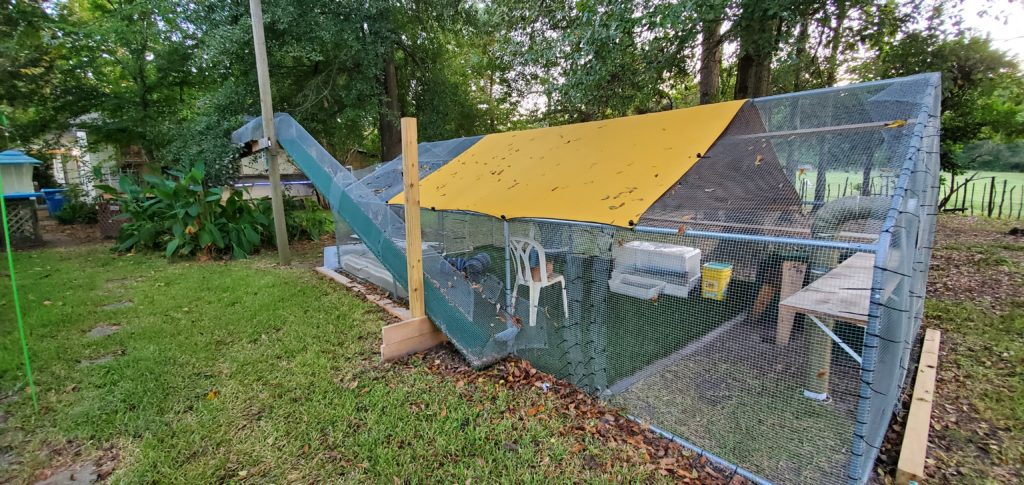
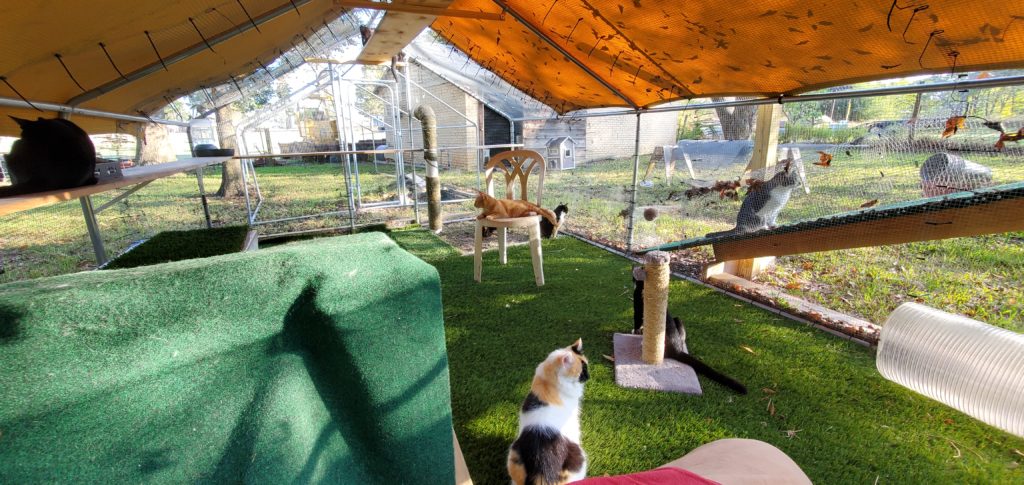
Our outdoor Catairiums were initially conceived and constructed to provide our personal house cats with the opportunity to enjoy as much outdoor experience as possible in a safe and secure environment. Each one connected to the house at that time and provided adequate space for maintaining a reasonable cat population density per Catairium and the house.
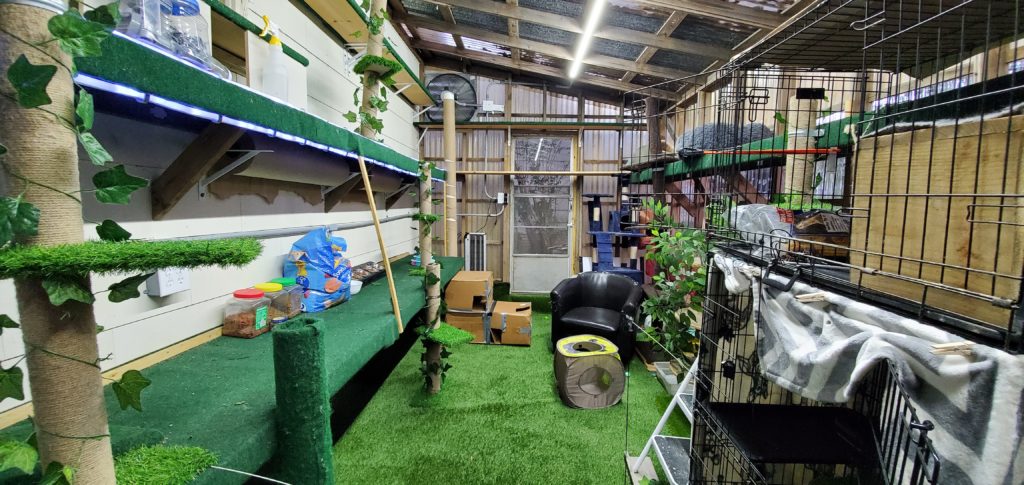
Over time, as I accepted more and more unfortunate, homeless cats and orphan kittens we continually expanded our capacity until we now have 13 Catairiums (each 10 x 20), a brick feral building (20×30) and all connect via secure tunnels to the main house, each other or the feral building. The main house has been COMPLETELY catified. They own it. 😊
However, I struggle dealing with the daily flood of calls begging for us to take more cats when we are already at 150 capacity. Kittens and cats come to us from TNR groups, from Animal control, shelters, other rescues and the public.
We find homes for 50 to 75 cats per year through our adoption channels.
We are not a rapid turn-around or high volume adoption rescue.
Orphan kittens are kept under our care until 3 months old and then spayed, neutered, vaccinated, FIV/FeLV tested microchipped and made ready for adoption.
A number of our intakes are anti-social or unadoptable or they require much longer time under care to heal or socialize and become adoption ready. Some may never be adoptable.
Some are FIV+ or FeLV+ and it is harder to find them homes. Some may have FIP and require lengthy treatment and observation of 6 months or more.
Fortunately, our Catairium environments are well suited for longer stays.
We hate confining cats in kennels and only do so when required for acclimation, treatment, quarantine or safety.
No cat leaves our care unless fully vetted and altered. Mainly because so many people cannot be trusted. (Did I say that outloud? ) The evidence is clear and compelling since EVERY homeless animal is due to an irresponsible human.
We seek to find responsible adopters who value the cats we have saved as much as we do.
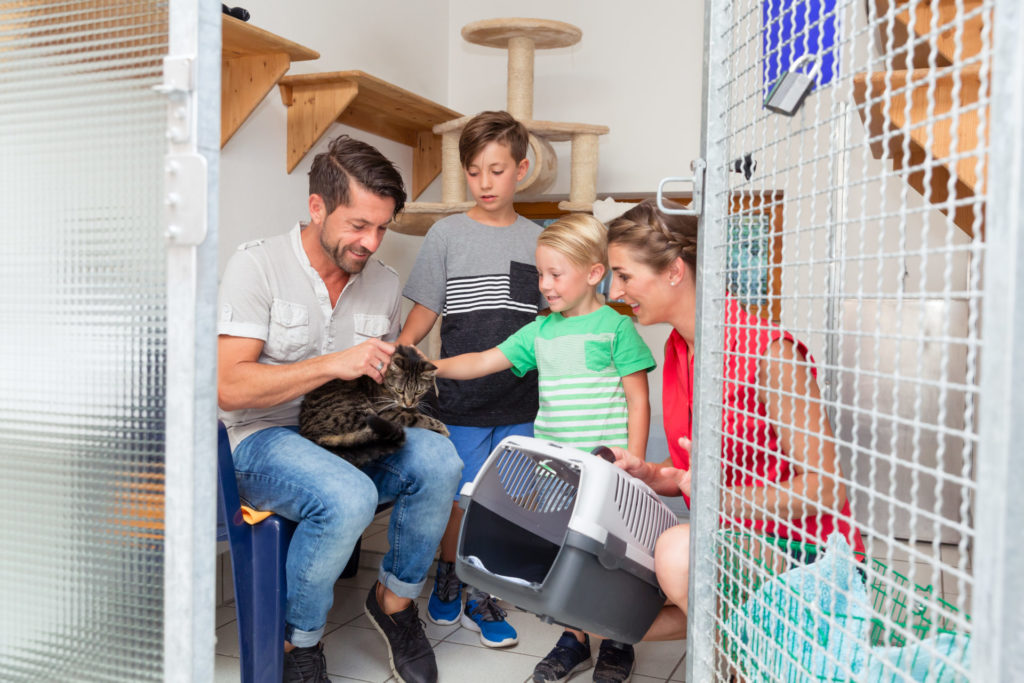
Our adoptions are not high-volume, rather they are high-care for each cat.
Our Catairiums, buildings and the house for our current 150 cat population requires four full-time workers plus volunteers to maintain things for the cats.
Like every reputable rescue, we may not be able to save them all, but we do everything possible to save each one that comes into our world and give them an opportunity to live wonderful lives they would have otherwise been denied.
Your generous contribution of any amount helps us to NOT fail and keep helping homeless kittens and cats.

Leave a Reply